


Focus on Dual Carbon Goals! Jiangning Airport Area Partners with CENTER INT to Build Zero-Carbon Parks
China’s carbon peaking and carbon neutrality strategy has entered a critical phase of full implementation. As a key carrier for industrial decarbonization and green energy transition, zero-carbon parks are embracing unprecedented development opportunities. On May 21, 2026, the Airport Area of Jiangning Development Zone officially signed a strategic cooperation agreement on low-carbon park construction with CENTER INT. Targeting the goal of building a zero-carbon park, the two sides will comprehensively advance the green and low-carbon transformation of the area. This cooperation is a major move to implement the Carbon Peaking Pilot Plan of Jiangning Development Zone, marking a solid step forward in the area’s green and low-carbon development.
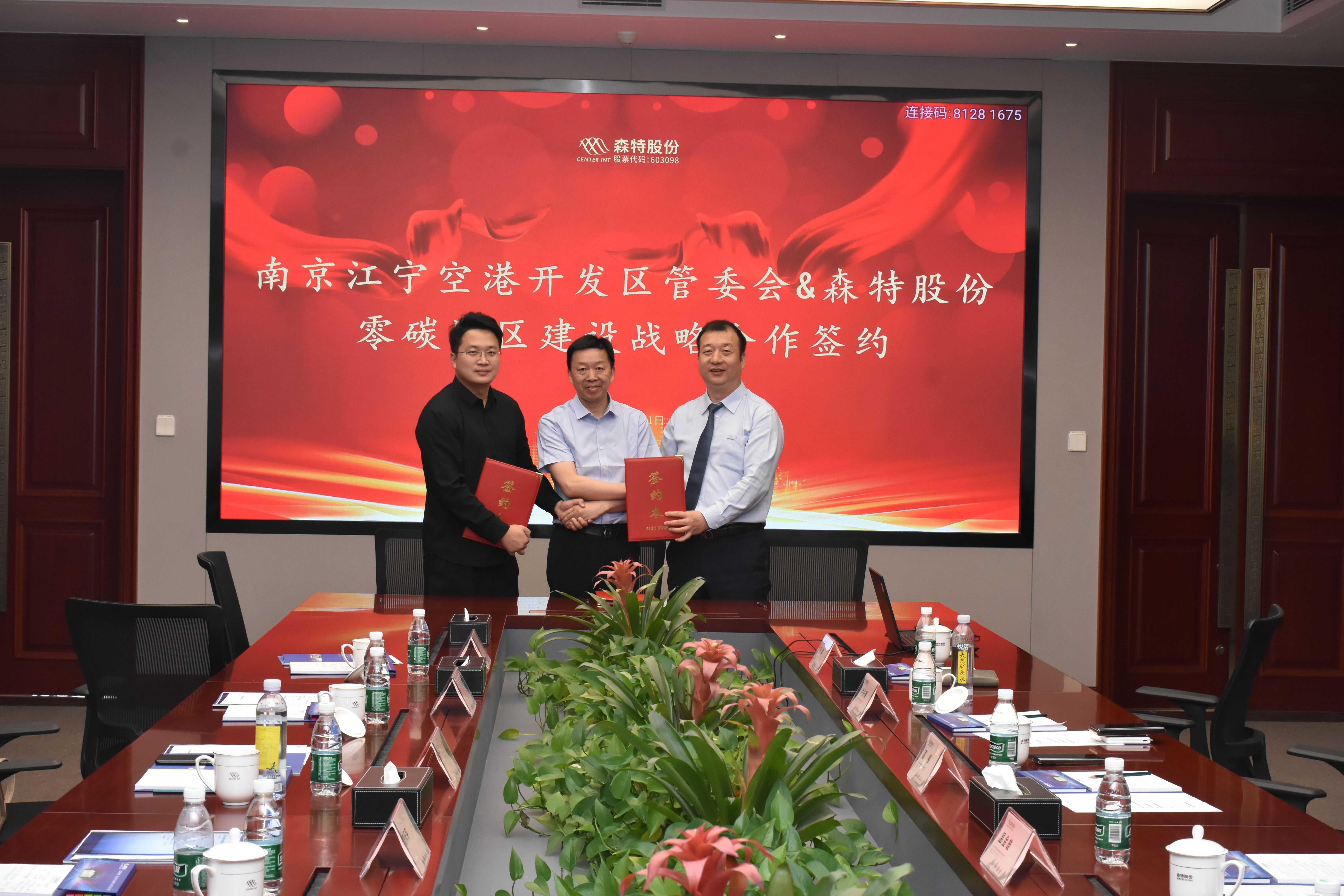
As one of China’s first batch of carbon peaking pilot parks, the Airport Area has made systematic arrangements for industrial carbon reduction and energy transition. It promotes differentiated zero-carbon development across six zones including the Airport Area, Purple Mountain Science City, Comprehensive Bonded Zone, Software Park, Jiulong Lake Headquarters Park and High-tech Venture Park. The Airport Area focuses on six key scenarios: zero-carbon logistics parks, zero-carbon factories, zero-carbon hotels, zero-carbon parks, low-carbon industrial parks, and supercharging demonstration stations featuring PV-energy storage, super charging and vehicle-to-grid interaction, striving to build a benchmark near-zero-carbon green logistics park.
In terms of cooperation scope, the Airport Area provides rooftops, public spaces and other sites for low-carbon applications, while CENTER INT undertakes key projects including rooftop photovoltaic systems, green transportation infrastructure and building energy-saving renovation. The low-carbon park will be built in a systematic manner covering seven aspects: zero-carbon energy supply, high-efficiency energy utilization, circular resource application, zero-carbon park transportation, green infrastructure, digital and smart operation management, and innovative industrial introduction.
Taking the logistics cluster as a pilot area, the two sides will focus on three core tasks:
Distributed PV Construction: Deploy distributed photovoltaic systems across the logistics park and complete rooftop PV renovation for properties owned by park authorities and local enterprises. PV facilities will be installed on all eligible rooftops to drive the park toward near-zero carbon emissions.
Zero-carbon Demonstration Scenic Area: Deploy charging piles, upgrade lighting systems with green power and undertake subsequent operation and maintenance.
Energy & Carbon Smart Management System: Build a dedicated management platform to realize full perception and interconnection of all park operations.
CENTER INT will push ahead with the above projects efficiently and pool high-quality industrial resources to ensure on-time delivery with high standards.
This strategic cooperation lays a solid foundation for the Airport Area to achieve its near-zero-carbon goals. Going forward, the two parties will jointly build a top-tier zero-carbon logistics park and create a replicable model for zero-carbon park development, contributing the "Airport Experience" to low-carbon transformation in Nanjing and across the country.

 Tel: +86 010-67856668
 Sales & Service:4000-603098
 Email: marketing@centerint.com


Copyright 2026 CENTER INT GROUP | All Rights Reserved 京ICP备09099836号-2